
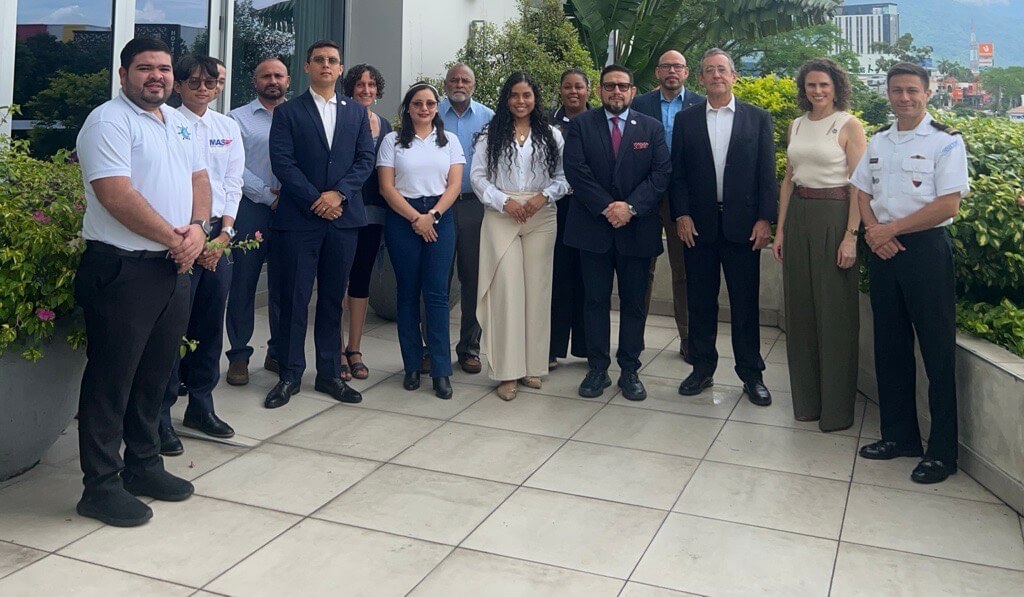
First Advanced Training Workshop on London Protocol Characterization in the Caribbean
Honduras hosted the first Advanced Training Workshop on London Protocol Characterization under the SMART-C LC/LP Project in San Pedro Sula from 19-22 October.
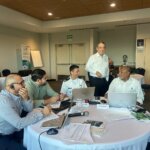
Project Manager Suzanne Agius, Project Technical Officer Polly Hill and Project Consultant Gildardo Alarcon Daowz led a group of 11 delegates from 8 countries across the wider Caribbean Region. Over four days of hands-on training, each participant was asked to assume the role of a disposal at sea permitting and monitoring officer in a London Protocol implementation simulation, and to undertake a full waste assessment, permitting, and monitoring process as part of a case-study permit review process.
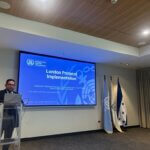
The Chief of the Department of Maritime and Port Environment Management in the General Directorate of the Merchant Marine of Honduras opened the meeting with a warm welcome to all the participants. The SMART-C LC/LP team then delivered facilitation training to enable participants to share their learning with colleagues back home. The team then gave a series of lectures providing details about each step of the London Protocol waste assessment process and examples for implementing these steps. Each lecture was followed by a hands-on exercise requiring participants to apply the lecture materials by reviewing a case-study permit application involving maintenance and capital dredging. The lectures and exercises covered:
- techniques and equipment for sediment sampling
- the design of field sampling programs to characterize waste physically, chemically, and biologically
- analysing field samples and using statistics to interpret chemical and other data
- developing and applying national sediment quality thresholds (called Action Levels under the London Protocol)
- alternatives assessment (to evaluate opportunities to re-use dredged sediment)
- waste prevention audits (to find opportunities to prevent pollution and avoid generating waste)
- selecting disposal sites
- determining impact hypotheses
- drafting disposal at sea permits
- designing field and compliance monitoring studies
- using monitoring results to adapt disposal site management
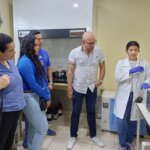
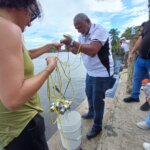
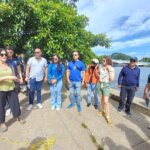
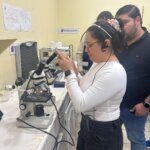
The last day of the workshop included a field trip to Puerto Cortes. This started on the edge of the Puerto Cortes lagoon, where each participant had the chance to apply their new knowledge of sampling techniques by deploying a Van Veen sampler to collect sediment. After the field exercise, participants took a tour of the Municipal Environmental Laboratory in Puerto Cortes. While still in the lab, the SMART-C LC/LP team then demonstrated the setup and use of a low cost, off the shelf marine rotifer toxicity test to characterize sediments.
The workshop concluded with a discussion about how the SMART-C LC/LP Project might be able to develop the capacity for sediment characterization in the region.
Delegates said:
- ‘I appreciated the overall organization of the training, the quality of the lecturers, and the opportunity to interact and exchange knowledge with participants from different backgrounds’
- ‘The field experience was very useful’
- ‘The content was excellent’
- ‘The team activities were engaging and enriching’
The workshop concluded with a certificate ceremony and explanation of next steps.
What’s next?
Participating countries are continuing to work on their National Action Plans for London Protocol implementation and undertake bespoke virtual training packages according to their level of LP implementation. Participants in the most recent training workshop will help answer questions and guide their colleagues through this training.
The Community of Practice for LP Implementation in the wider Caribbean region, co-chaired by Honduras and Dominica, will hold its first quarterly in November to maintain the momentum and keep each country in the region moving on its journey to full London Protocol implementation.
Finally, the SMART-C LC/LP Project team will repeat this advanced characterization training in 2028 for other countries taking part in the project, giving them a chance to build their foundational knowledge first.